Open to work

Open to work

Open to work

Based in Melbourne

Full Australian Working Rights

04:49:03 PM

Scaling Trust & Solving Cognitive Overload

Scaling Trust & Solving Cognitive Overload

Scaling Trust & Solving Cognitive Overload

Redesigning the Mintpay Core Experience to Solve Cognitive Overload

Redesigning the Mintpay Core Experience to Solve Cognitive Overload

Category

Mobile App Design

Timeline

Jan 2024 - Feb 2024

Team

1 PM, Head of Marketing, CEO, 2 Backend Developers, Front End Team

Platform

Mobile App (iOS, Android)

Short on time?

Listen to the quick audio brief

Business Impact & Outcomes

Significant Reduction in Support OpEx

Drastically reduced "balance enquiry" support tickets by redesigning dashboard clarity, easing the burden on customer service and allowing the team to focus on growth.

Boosted User Activation & Lowered CAC

Meaningfully increased sign-up completions and lowered Customer Acquisition Cost (CAC) by replacing a cognitively heavy form with a frictionless onboarding wizard.

Exceptional Market Validation

Maintained a near-perfect App Store rating, with user reviews specifically praising the app's transparency and ease of use during high-pressure checkout moments.

image

The Challenge

Mintpay’s business was scaling quickly, but its web presence was stuck in a rudimentary MVP phase. We needed to transform an underperforming website into a high-converting engine capable of driving B2C app downloads and acquiring B2B merchants, while overcoming significant market hurdles:

Mintpay’s business was scaling quickly, but its web presence was stuck in a rudimentary MVP phase. We needed to transform an underperforming website into a high-converting engine capable of driving B2C app downloads and acquiring B2B merchants, while overcoming significant market hurdles:

The Trust Deficit

The "Buy Now, Pay Later" (BNPL) concept was entirely new to Sri Lanka. Users instinctively associated installment plans with the hidden fees and high interest rates of traditional banks and leasing companies, causing them to abandon the site out of skepticism.

The "Buy Now, Pay Later" (BNPL) concept was entirely new to Sri Lanka. Users instinctively associated installment plans with the hidden fees and high interest rates of traditional banks and leasing companies, causing them to abandon the site out of skepticism.

High Bounce Rates & Poor IA

The existing site suffered from severe navigational flaws and dense, confusing copy. Without a clear Information Architecture, users couldn't easily find what they needed, leading to cognitive overload and desperately low engagement.

The existing site suffered from severe navigational flaws and dense, confusing copy. Without a clear Information Architecture, users couldn't easily find what they needed, leading to cognitive overload and desperately low engagement.

Outdated Brand Perception

The MVP-level aesthetic lacked the premium, secure feel required for a modern financial product. This weak visual identity was actively hurting our conversion benchmarks and making it difficult to attract and onboard top-tier retail merchants.

The MVP-level aesthetic lacked the premium, secure feel required for a modern financial product. This weak visual identity was actively hurting our conversion benchmarks and making it difficult to attract and onboard top-tier retail merchants.

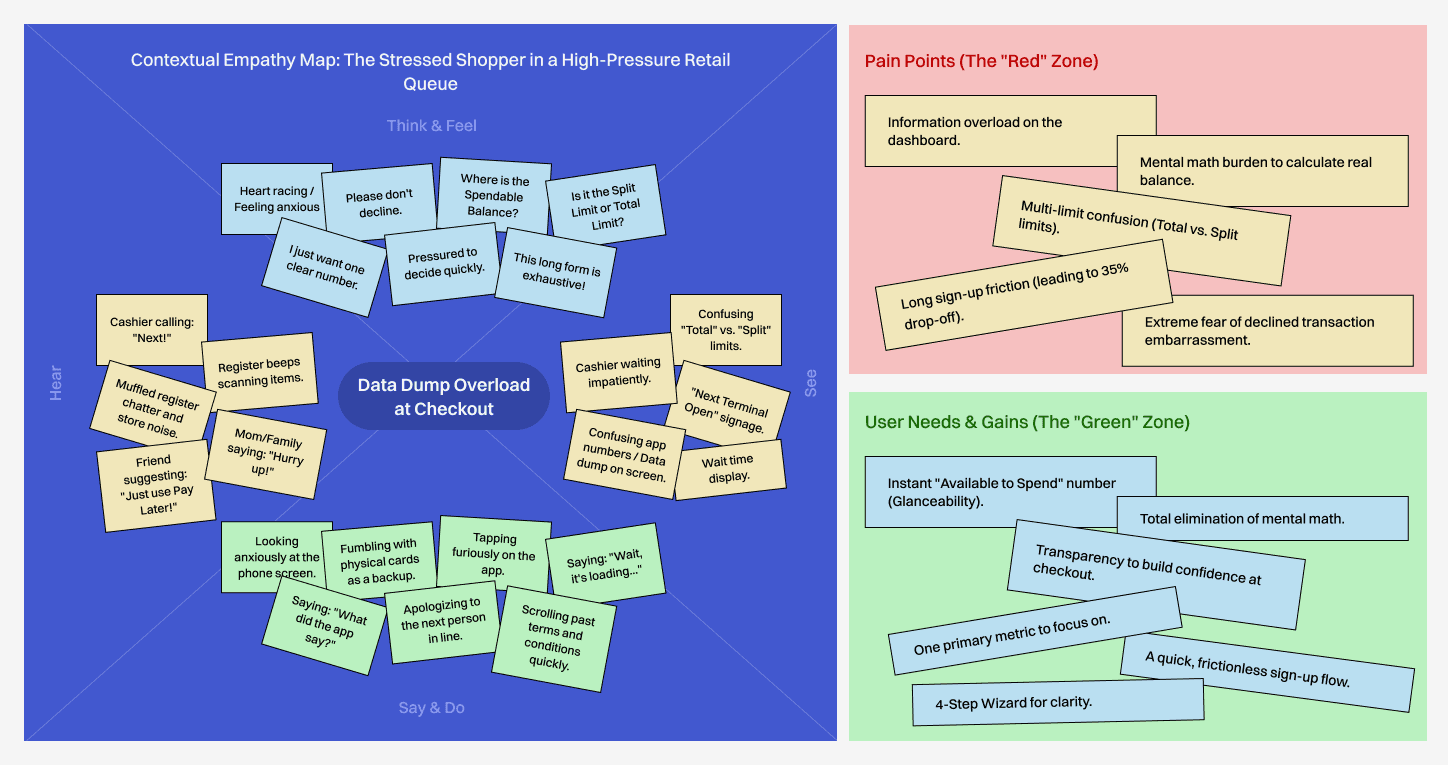
Strategic Discovery: Designing for Context

Early discovery revealed the original UI assumed a relaxed user. In reality, users were anxious, standing in fast-paced retail queues (e.g., K-Mart, JB Hi-Fi), and needed to know their exact purchasing power instantly to avoid declined transactions.

Early discovery revealed the original UI assumed a relaxed user. In reality, users were anxious, standing in fast-paced retail queues (e.g., K-Mart, JB Hi-Fi), and needed to know their exact purchasing power instantly to avoid declined transactions.

🔖 Core UX Principle Established

Glanceability. If a user couldn't accurately understand their available balance in under two seconds without mental math, the design failed.

Glanceability. If a user couldn't accurately understand their available balance in under two seconds without mental math, the design failed.

⚖️ Navigating Product Trade-Offs

The Conflict:
Marketing pushed to make the "Total Approved Limit" the largest number on the screen to encourage higher cart sizes.


The Pushback:
Advocated against this deceptive pattern. Showing a Rs. 1,000 limit when a user only has Rs. 200 available for their first installment guarantees checkout embarrassment and drives up support tickets.


The Resolution:
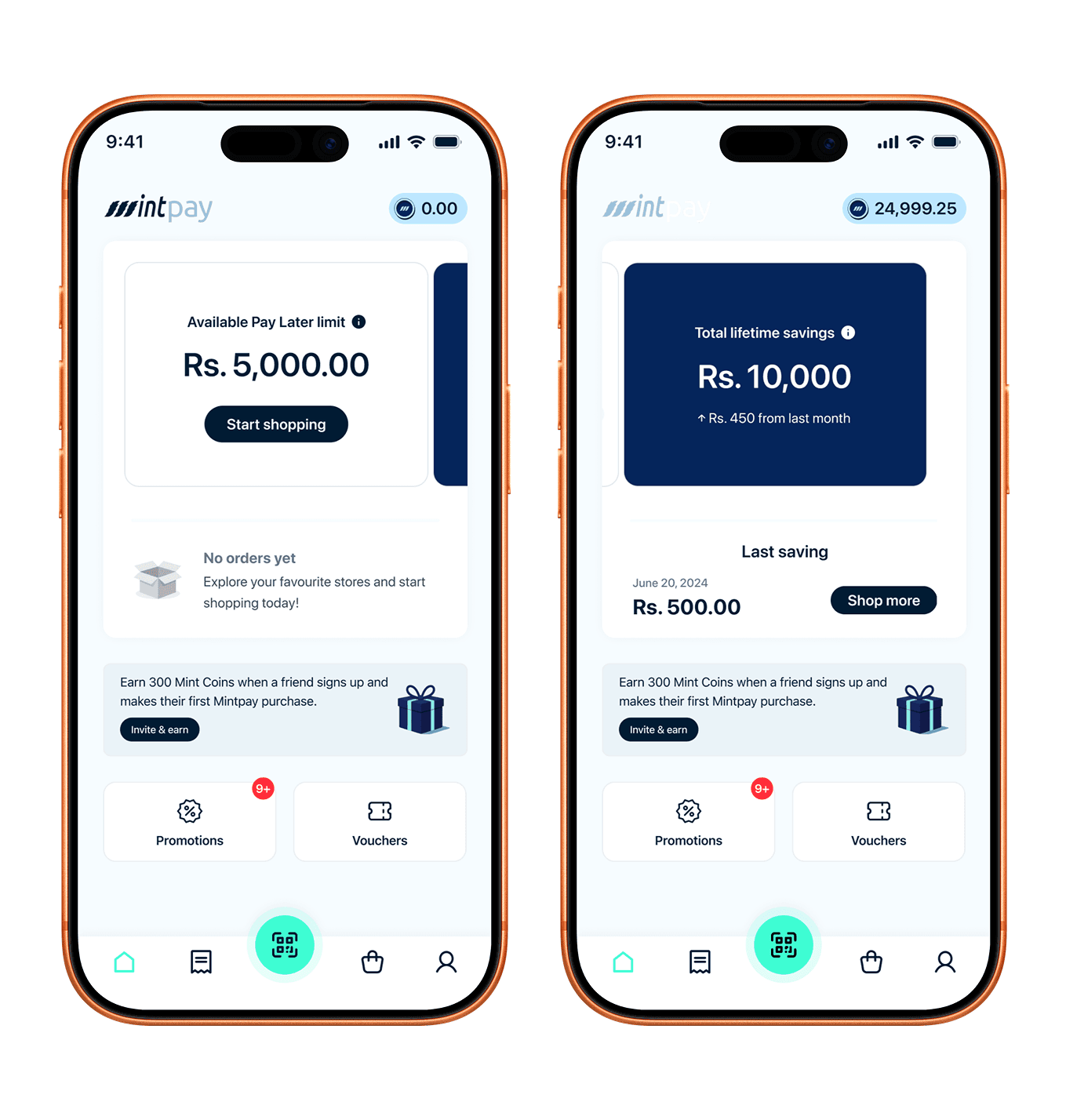
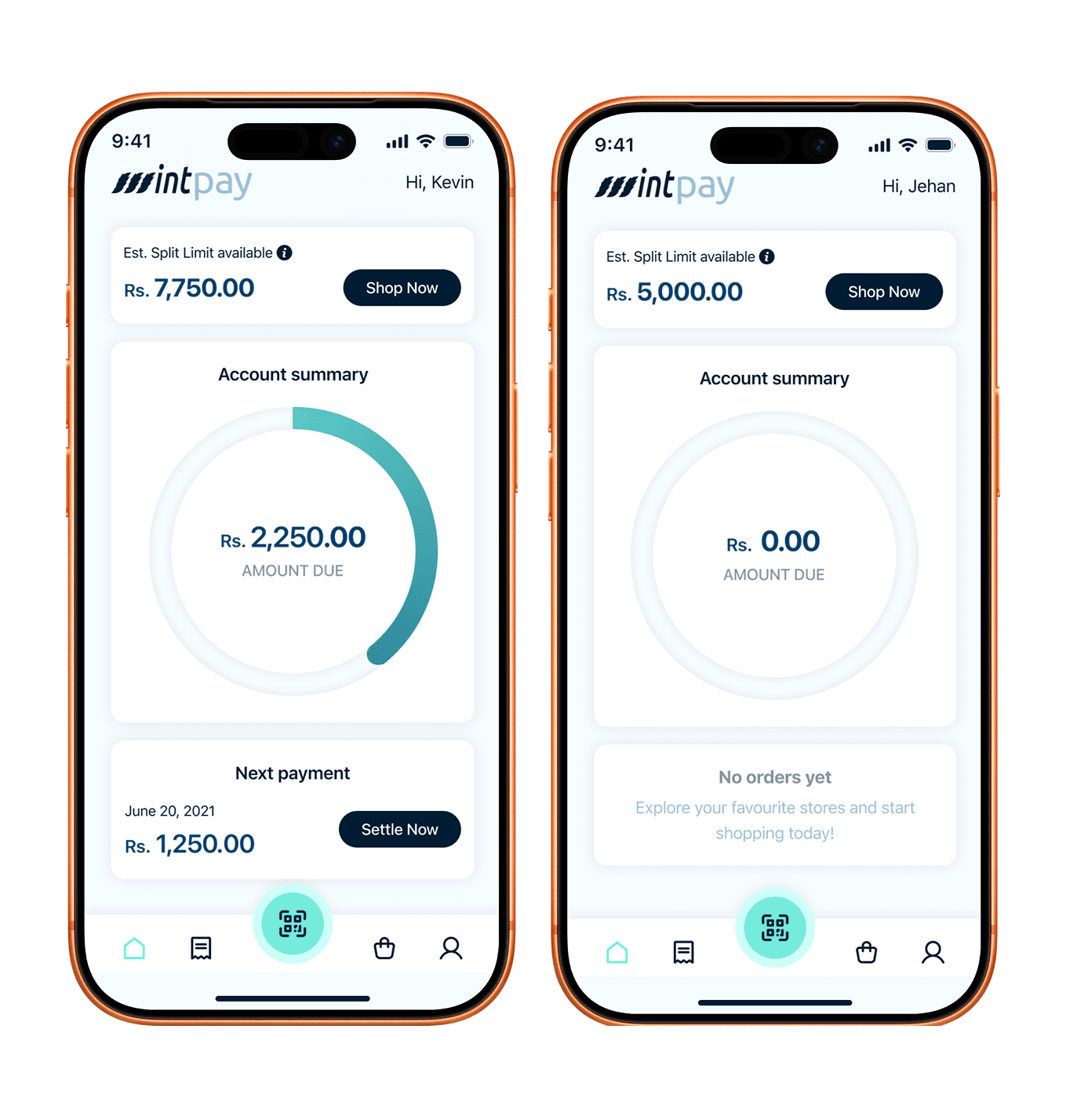
Facilitated a cross-functional compromise. "Available to Spend Now" became the hero metric, protecting the user at checkout. The "Total Limit" was shifted to a secondary, accessible card, successfully balancing user trust with marketing objectives.
The Solution & Execution

Robust Search & Filter Architecture

I completely restructured the Information Architecture (IA) using progressive disclosure.


  • Swipeable Carousel: Replaced the static, confusing list of financial numbers with a clean carousel. Primary data is front-and-center, while secondary details are accessible via intuitive Bottom Sheets.


  • Visual Hierarchy: Utilized high-contrast "Tabular Figures" for financial data, ensuring numbers were instantly readable and aligned perfectly for quick scanning.

Frictionless Onboarding

Frictionless Onboarding

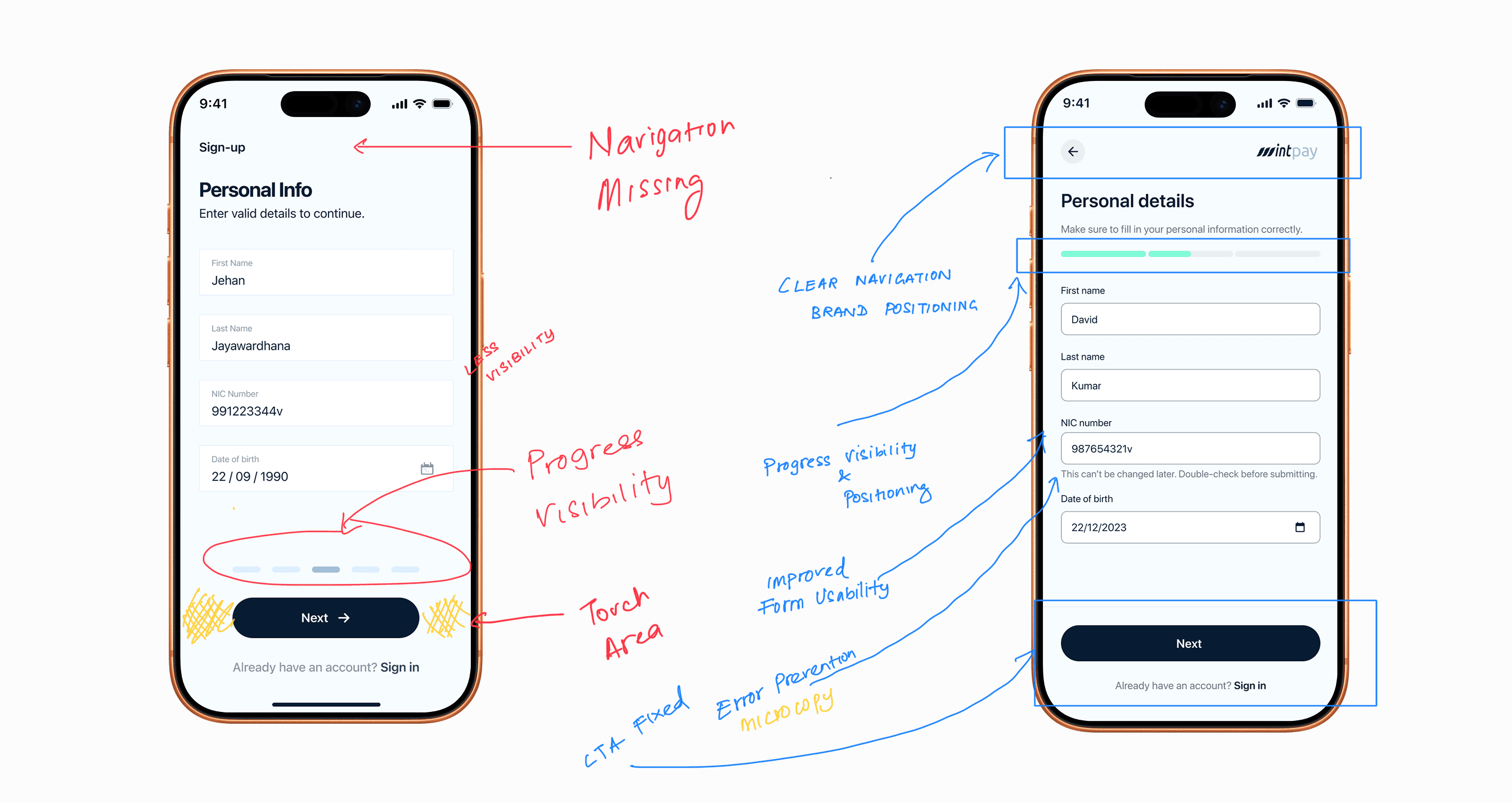
I dismantled the formidable "long scroll" registration page.


  • 4-Step Wizard: Broke the cognitive load into a digestible, multi-step wizard, utilizing micro-interactions to provide positive reinforcement at each completed stage.

Strict Accessibility Standards (WCAG 2.1)

Strict Accessibility Standards (WCAG 2.1)

Dynamic Type: Engineered the dashboard layout to scale flawlessly if a user increased their system font size, crucial for our older demographic.


  • Contrast Compliance: Reworked the "Grey on White" secondary text to meet AA (4.5:1) standards, guaranteeing readability in bright, outdoor shopping environments.